
The Conference on Pattern Languages of Programs, People, and Practices (PLoP) was established over thirty years ago by The Hillside Group. It gathers people who wish to improve the quality of life through designing and using social and technical systems more humanely, effectively articulating professional and other creative practices, and sharing this tacit knowledge more broadly. To achieve this, the conference promotes the use of patterns and pattern languages, as well as the underlying theory of the nature of order.
Originating in the work of Christopher Alexander on building architecture, these ideas have been further developed in computer science, fundamentally changing the perception of software development. Much of the pioneering work in this area originated at this and other PLoP conferences worldwide. Patterns and pattern languages have expanded to many other areas, including art, well-being, learning, psychology, organizational development and change, sociology, and anthropology. PLoPs encourages a variety of submissions regardless of the area they target.
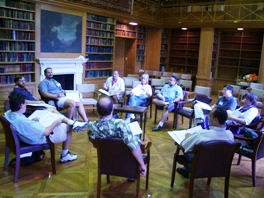
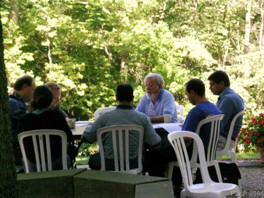
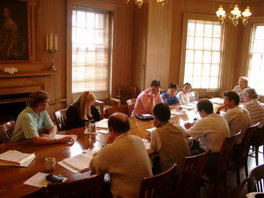
The Hillside Group sponsors many PLoP conferences around the world. These conferences focus on writing groups to improve patterns through group exposure. Each conference offers advanced topics for the more adept pattern writers. Participants have the opportunity to refine and extend their patterns with help from knowledgeable and sympathetic pattern enthusiasts.
There have been many years of experience from those who have run the PLoPs conferences. The following information includes example letters, example budgets, principles of PLoPs, tips for the chairs, and more. This is evolving, and if you have been involved in planning a PLoP conference and have some insight or examples to share that will benefit organizers, please contact the Hillside Group.
How to run PLoPs
When running a PLoP-like event, you need to consider if it is a repeat of a previous event, like PLoP or EuroPLoP or if it is a new event. If it is a repeating event, then the Program Committee is nominated by the PC that was in charge of the previous event, and that nomination was approved by the Hillside Event Coordinator, usually in consultation with others of the Hillside Board. If it is a new event, then members of the PC were contacted by the Hillside Event Coordinator, who consulted with others and approved it.
The PC must make a budget, set a date, and reserve a place. The budget will provide a plan for not losing money, and will also indicate how much money will be needed before the event. This budget will be given to the Event Coordinator and the Hillside Treasurer, who will check that it is plausible and that it will not cause cash-flow problems. See Make a Budget.
Once the budget is approved, the PC can spend money. Any contracts with hotels and the like should be given to the Event Coordinator to sign. The Hillside Treasurer will authorize the payment of all bills that are not too far off the budget without further discussion.
If the event is going to be repeated, the PC should nominate members for the next PC. There should be a final report on finances and the other results of the event, such as the number of people who attended and the number of papers produced. This report should be given to the Hillside Board.
Responsible People
Conference Chairs – The conference chairs are responsible for implementing the budget set forth and accepted by the committee. The chair works directly with venue personnel to create the desired atmosphere for the conference. The chair assists in all aspects of the conference, including setting up the website, determining deadlines for registration, creating transportation information, and negotiating meeting space.
Program Chairs – The program chairs set up the topics for the conference. (refer to Bob’s timeline)
Hillside Treasurer – The Hillside Treasurer is responsible for authorizing payment of bills incurred on behalf of the conference. No further discussion is needed if the bills are aligned with the proposed and accepted budget.
Site Webmaster – The Site Webmaster is responsible for maintaining the information on the website. If registration takes place online, the Webmaster will work with the chair in documenting the registration information, as well as keeping the information for the conference up to date.
Imagination Run Wild, Focus Group, and Hot Topic Leaders – Imagination Run Wild, Focus Group, or Hot Topic Leaders should work closely with the Program Chairs. They take responsibility for finding participants for their topics, for leading the discussion at the event, and for responding to any inquiries by possible attendees.
Ensuring an appropriate and safe atmosphere is important. Participants are expected to act professionally and courteously towards each other during the conference. The goal is to ensure that participants feel comfortable sharing their insights and suggestions for improvement. We all feel uneasy when our work is being evaluated, and so authors will feel nervous under the best of circumstances.